Key Takeaways
- Low-impact exercises protect your joints while building leg strength and balance.
- Chair-based workouts provide safe options you can do from home.
- Standing exercises with support help maintain independence in daily activities.
- Water workouts offer gentle resistance that’s perfect for sensitive joints.
- Senior living communities provide professional guidance and safe spaces for exercise.
Why Low-Impact Exercise Matters for Your Leg Health
Your legs carry you through every day, from getting out of bed to walking to the mailbox. When you choose low-impact exercises, you’re giving your joints the care they deserve while still building the strength you need. Kingston of Ashland understands how important maintaining leg strength is for your daily independence and overall well-being. These gentle movements protect your knees, hips, and ankles from unnecessary stress.
Strong leg muscles help prevent falls and keep you steady on your feet. You’ll notice improvements in simple tasks like climbing stairs, getting up from chairs, and walking longer distances without fatigue. Low-impact workouts support your independence by maintaining the muscle power that makes daily activities easier and safer. Many communities offer safe exercise programs designed specifically for your needs.
The beauty of these exercises lies in their accessibility. You don’t need a gym membership or expensive equipment. Many can be done right in your living room, and they’re designed to work with your body’s current abilities rather than against them.
Safe Chair-Based Leg Exercises You Can Do Anywhere
Seated Leg Extensions
Sit comfortably in a sturdy chair with your back supported and feet flat on the floor. Slowly straighten one leg out in front of you, hold for 2 seconds, then lower it back down. Your thigh muscles do the work while the chair provides stability.
Start with 5 repetitions on each leg and gradually work up to 10. You can do this exercise while reading or watching your favorite show. The movement strengthens your quadriceps muscles, which help you stand up from chairs and walk with confidence.
Ankle Circles and Flexes
While seated, lift one foot slightly off the ground and slowly rotate your ankle in circles. Make 5 circles in each direction, then point your toes away from you and flex them back toward your shin. This simple movement wakes up your lower leg muscles and improves blood flow.
These exercises are particularly helpful if you spend long periods sitting. They reduce stiffness and help prevent swelling in your feet and ankles. You can easily incorporate them into your morning routine or evening wind-down time.
Seated Marching
Sit tall in your chair and lift one knee up as if you’re marching in place. Lower it back down and lift the other knee. Keep the movement controlled and focus on engaging your hip muscles with each lift.
This exercise builds coordination between your hips and legs while strengthening your core. It’s gentle enough to do daily and helps maintain the hip flexibility you need for walking and climbing stairs. Chair-based exercises like these can be combined with other gentle movements to create a complete workout routine.
Standing Exercises That Build Leg Strength
Wall Push-Ups for Your Calves
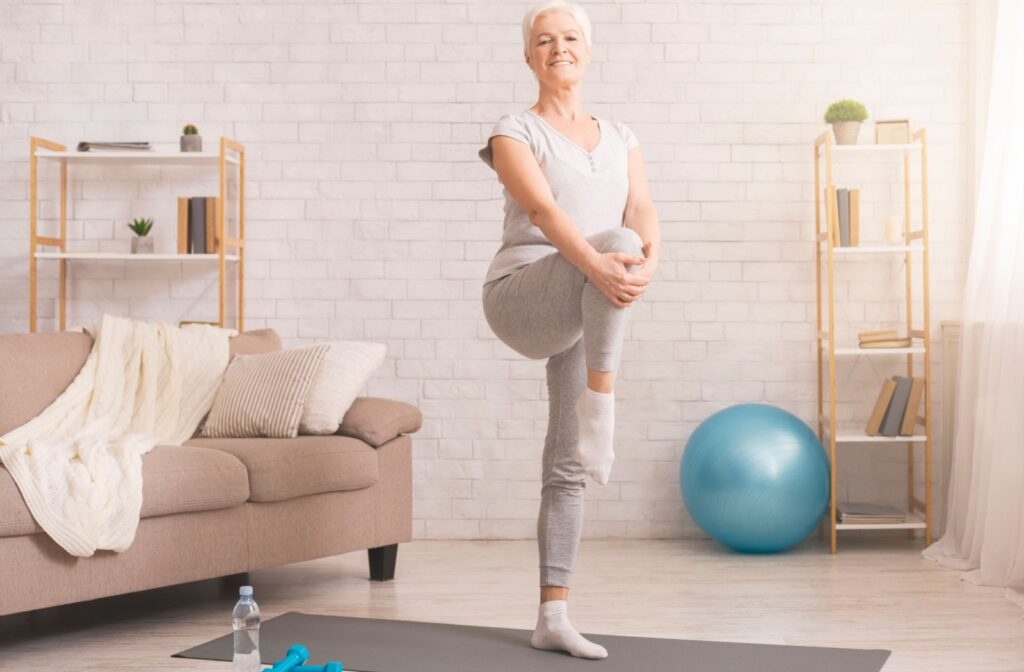
Stand at arm’s length from a wall and place your palms flat against it. Step one foot back and gently lean forward, feeling a stretch in your back calf. Hold for 15-20 seconds, then switch legs. The wall supports your balance while you target those important lower leg muscles.
Strong calves help propel you forward when walking and provide stability when standing. This exercise also improves ankle flexibility, which can help prevent trips and falls.
Mini Squats with Chair Support
Stand behind a sturdy chair with your hands resting lightly on the back. Slowly lower yourself as if you’re about to sit down, but stop halfway and stand back up. The chair is there for balance and confidence, not to hold your full weight.
This movement mimics the motion of getting up from chairs and toilets, making these daily activities easier over time. Your thigh and glute muscles work together to support your body weight and maintain your balance.
Heel and Toe Raises
Hold onto a counter or chair back for support. Slowly rise up onto your toes, hold for 2 seconds, then lower back down. Next, lift your toes up while keeping your heels on the ground. Alternate between these 2 movements for a complete ankle workout.
These exercises strengthen the muscles that control your balance and help you walk with a normal stride rather than shuffling your feet. They’re simple enough to do while preparing meals or talking on the phone.
Water-Based Leg Workouts for Joint-Friendly Movement
Water exercise offers something truly special for your leg muscles. The buoyancy supports your body weight, taking pressure off your joints, while the water provides gentle resistance that strengthens your muscles. You can move freely without worrying about balance or impact.
Simple pool walking forward and backward engages all your leg muscles while improving your cardiovascular health. Leg swings and marching in place become easier in water, allowing you to move through a fuller range of motion. The warmth of heated pools can also soothe achy joints and muscles. Exercise guidelines for older adults often highlight water activities as particularly beneficial for maintaining strength while protecting joints.
Many senior living communities offer pool access and water exercise classes designed specifically for your needs. The social aspect of group water workouts adds enjoyment to your fitness routine while providing encouragement from peers who share similar goals. Stretching exercises can also be adapted for water environments, creating comprehensive workout options.
How Senior Living Communities Support Your Active Lifestyle
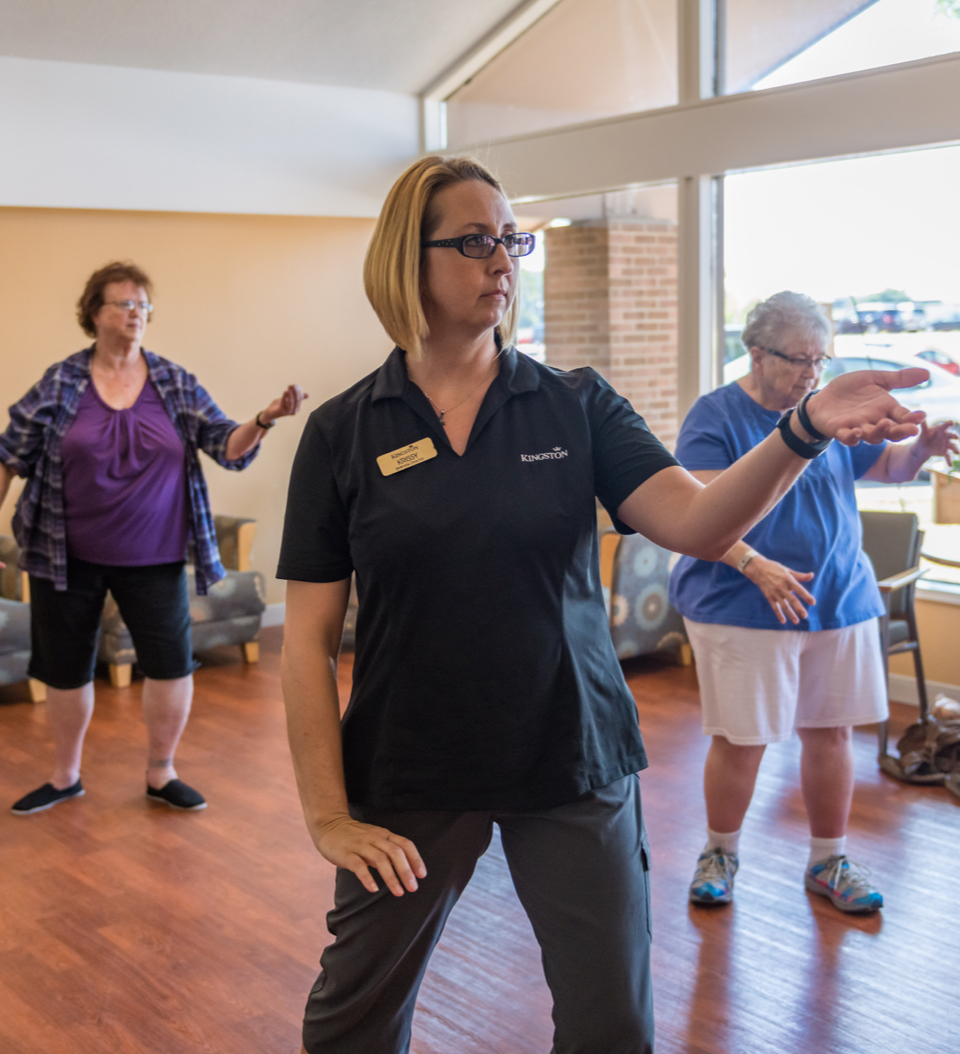
Senior living communities understand that staying active is key to your well-being and independence. Their rehabilitation services often include physical therapy programs that focus on leg strength and balance training. You’ll work with professionals who understand how to adapt exercises for your specific needs and abilities.
Group fitness classes create a supportive environment where you can exercise safely with others. The communities provide proper equipment and safe spaces designed with your mobility in mind. Professional caregivers can offer guidance on proper form and help you progress at your own pace.
Support Your Strength, Every Step of the Way
Communities like Kingston of Ashland integrate physical wellness into daily life through various activities and programs. Whether you need skilled nursing support during recovery or want to maintain your strength through assisted living services, the focus remains on helping you stay as active and independent as possible. The combination of professional care and social engagement makes exercise both safer and more enjoyable.
Discover how Kingston of Ashland’s personalized care and wellness programs help you stay active, supported, and independent—schedule a visit today.